
Tags
Each of the four CONNETIX PRO Build It 4 Ways packs – Animals, Flowers, Vehicles and Creatures – comes with four guided build ideas to get you started. But mix and match the packs, and even more building possibilities begin!
I couldn’t wait to experiment with the new colours and shapes, and I’m excited to share nine creative ideas to inspire your builds.
Use these ideas as a starting point to explore just how versatile and open-ended the CONNETIX PRO Build It 4 Ways packs can be. Change a design, add something new or transform it into something completely different – there’s always room to follow your imagination.
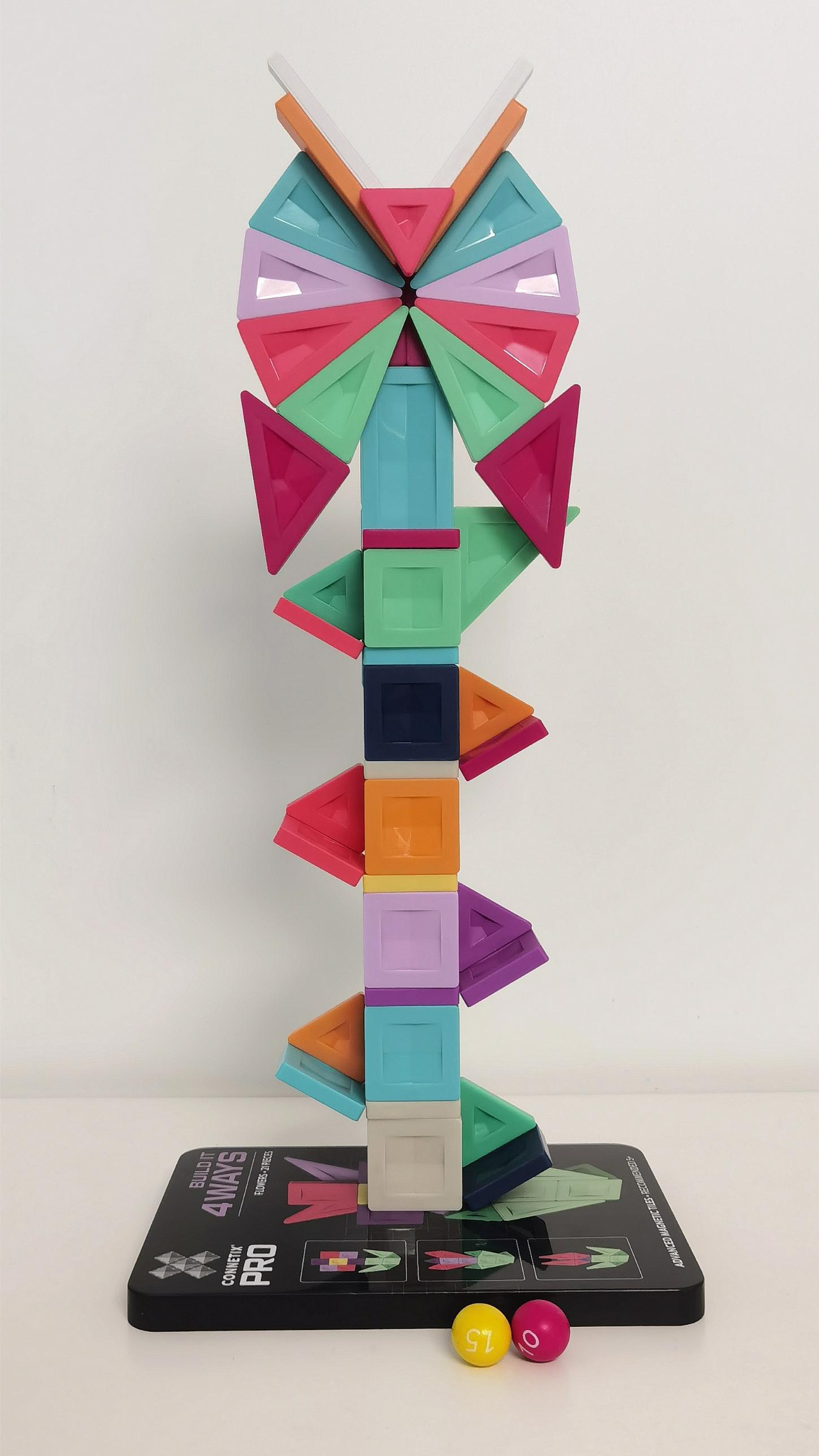
Ball drops are one of our favourite ways to play with CONNETIX, so as soon as the new PRO packs arrived, I knew I had to try building one!
For this first play idea, I combined the Animals Pack and Flowers Pack to create a colourful flower ball drop, using one of the tin lids as the base. Using a wooden ball, the structure becomes an interactive activity that combines building, movement and sound.
Tip: Test each level as you build. Release the wooden ball from the top and watch how it drops from one platform to the next. As the tower grows, keep checking the angle and position of the tiles – even a small change can send the ball rolling off the side.
I also like how naturally this build brings STEAM exploration into the play:
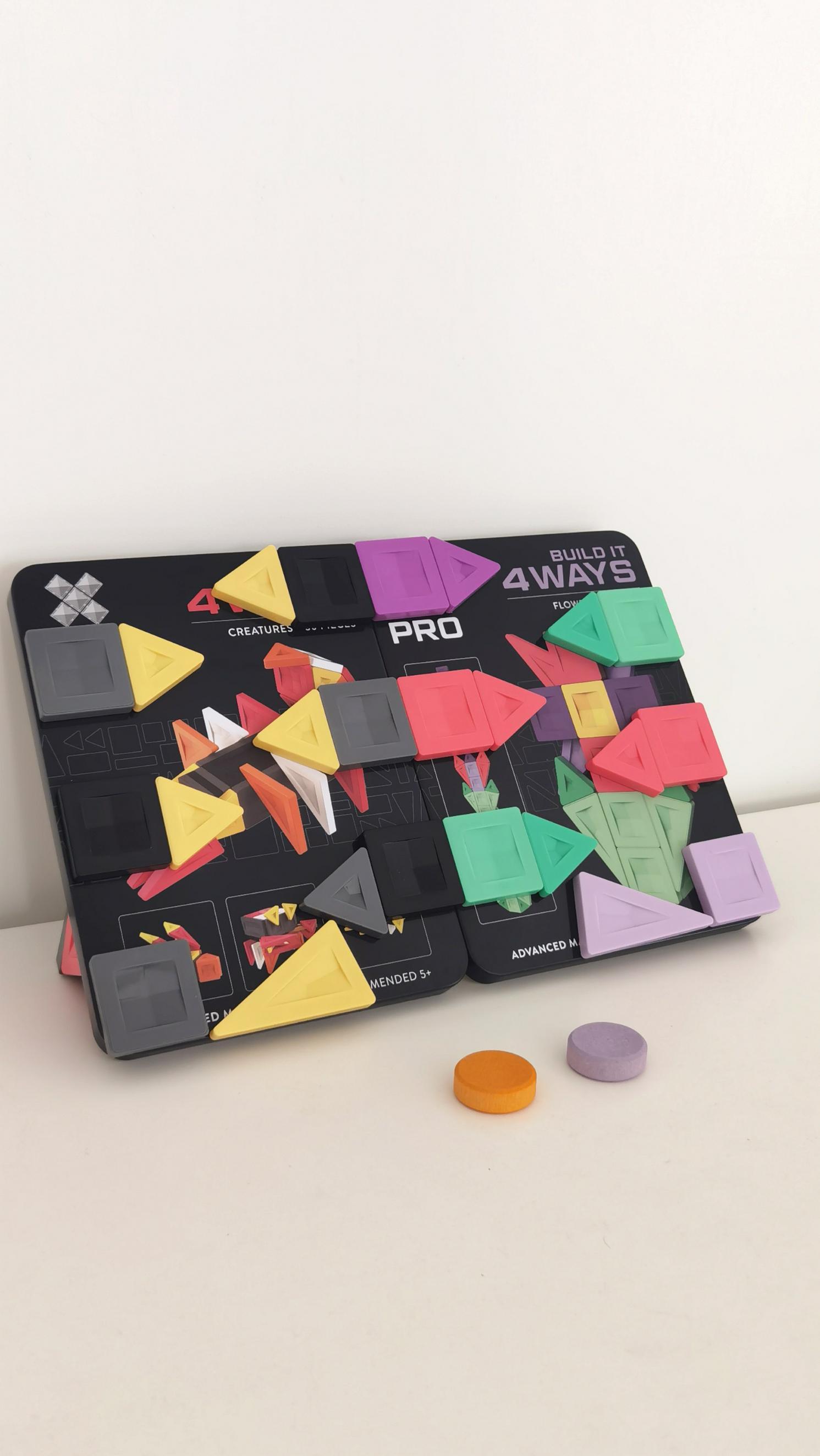
For this next play idea, I used two lid tins to create a coin drop game. This time, the packaging becomes part of the game, with the lids serving as the boards!
I arranged squares and triangles across the front of each lid, leaving spaces for a coin to travel between them. Behind the lids, I used a few more tiles to build small supports that keep them tilted at an angle.
Release a wooden coin at the top and watch where it goes as it meets the tiles on its way down. Try starting from a different spot or move a tile and see how that changes the route. Will the coin make it to the bottom, or will it get caught somewhere along the way?
What I like about this setup is that you can keep the lids separate or place them side by side. Play on one board on your own, or use both for a two-player game. You can release a coin each at the same time and see which reaches the bottom first.
There are several opportunities for learning through this little coin drop: 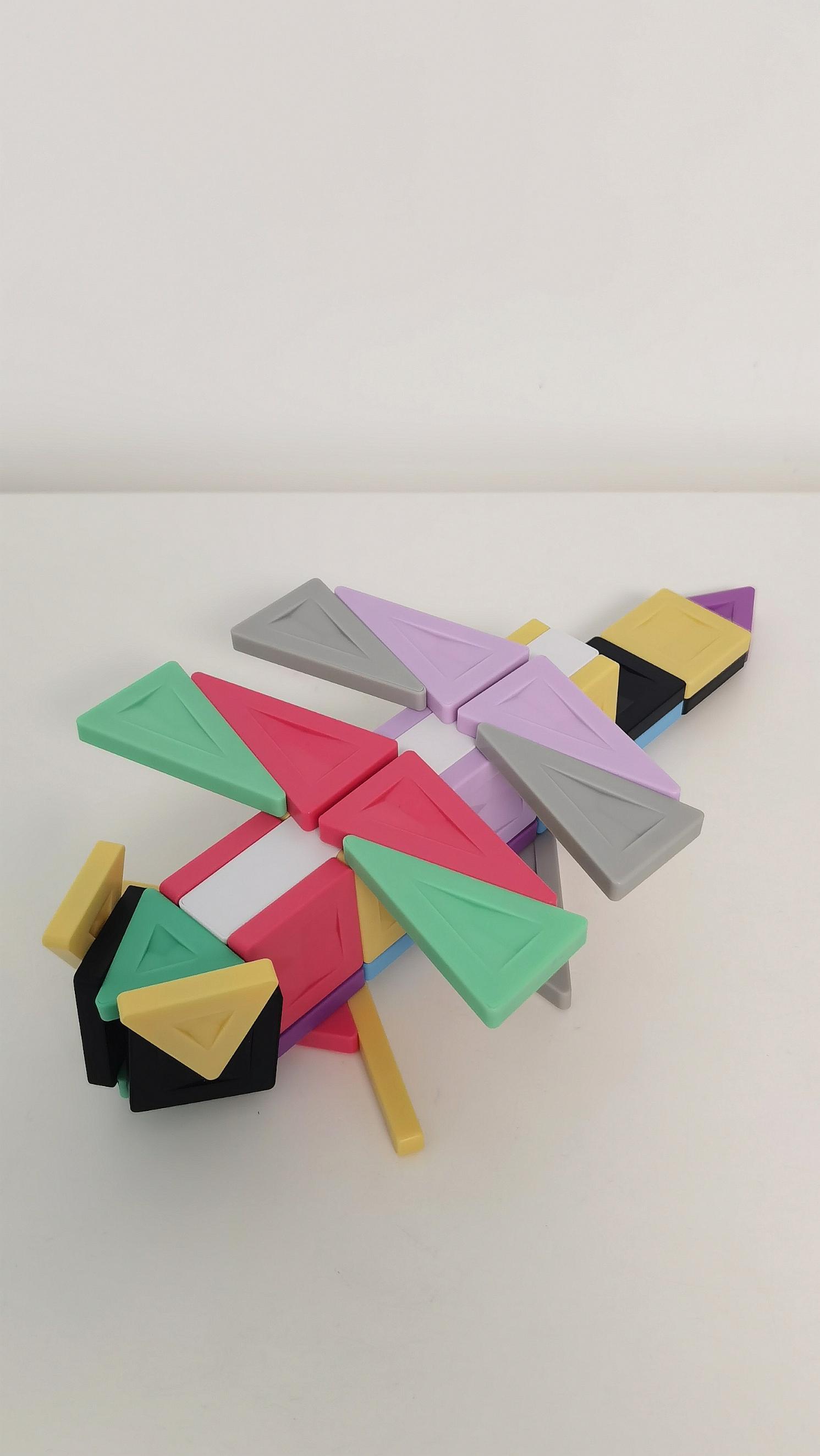
For this dragonfly, I combined the pieces to create a long body, then used triangles to form wings spreading out on both sides. The colours from the Flowers Pack brought a playful touch to the design. This challenge encouraged me to look beyond the themes of the packs. It’s a lovely example of how the same shapes can take on a completely different character depending on how you arrange them. You could try a similar challenge by choosing two packs and seeing what their colours and shapes inspire. Start with one part of your creature, then experiment with the pieces around it. Changing the wings, making the body longer or rearranging the head could lead to something entirely new. There are several learning opportunities in this kind of building: 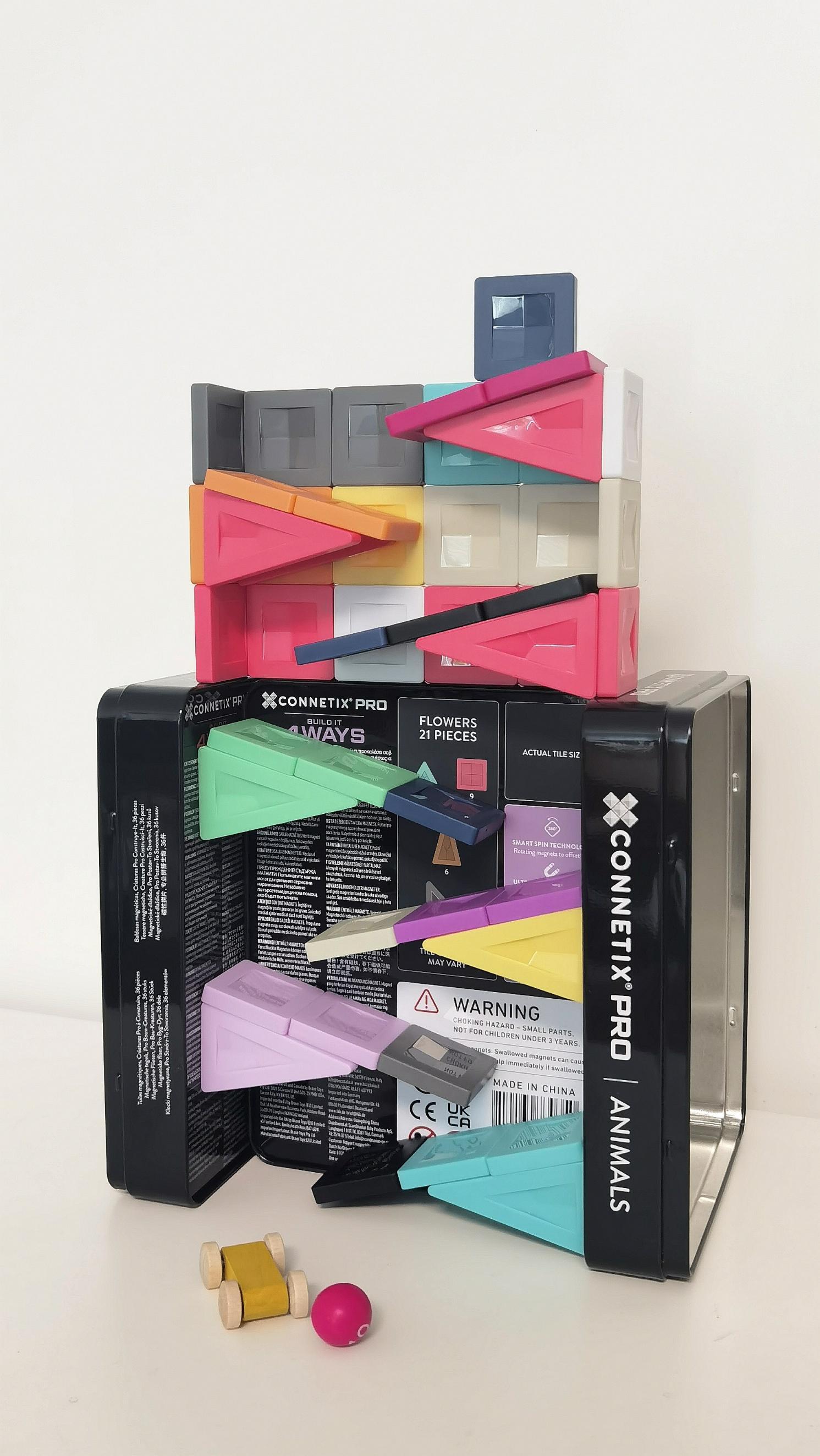
Ball and car drops are another one of our favourite ways to play! With more pieces to work with, I could build a taller route with several slopes for the toys to travel down.
I used the tin cases as part of the structure, with tiles attached to them and a wall of squares extending above. Triangles support the sloping tracks, which alternate from one side to the other to create a zigzag route down the build. The tins gave me another surface to build on and attach the tracks.
For this setup, I used a small wooden ball, a single mini wooden car and a centipede car. What I like about having these different toys is the chance to explore the same build in different ways. A ball, a little car and a longer, connected car each bring something new to test.
Start with one toy at the top and release it onto the first slope. Watch how it reaches the end and drops onto the next level. Then try another toy and compare what happens.
Tip: Test with each toy as you build. A gap that works for the wooden ball might need adjusting for the car, while the longer centipede car gives you another challenge to think about. Try changing the length of a track or the space between levels, then see what difference it makes.
This is where the build becomes a STEAM experiment:
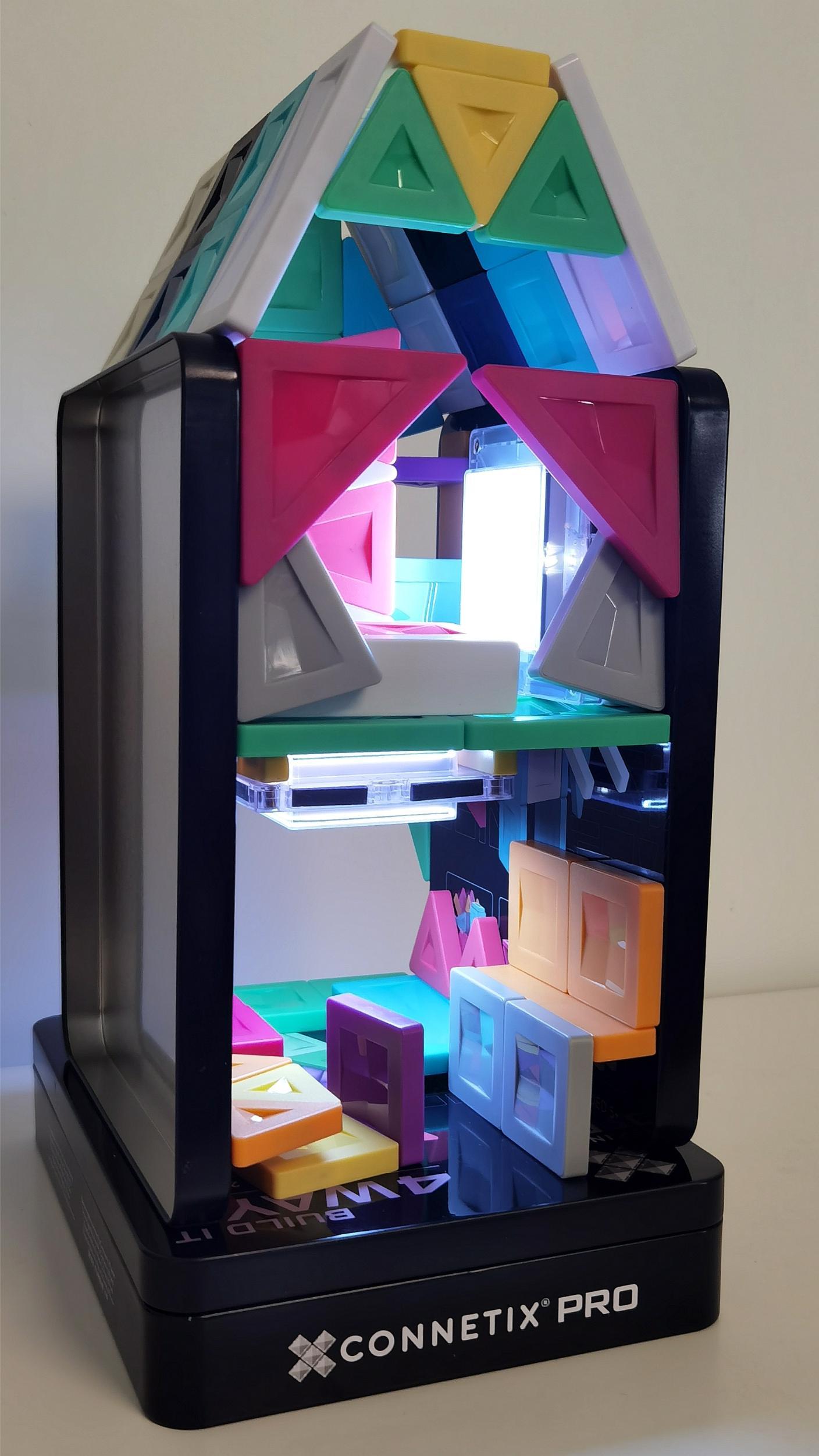
For this little dollhouse, I used the tins again, this time as the base and sides of the house. It surprised me how much detail could fit into this little house. Squares become seats and backrests, triangles become roofs and curtains, and different combinations of shapes become tables and other furniture.
To add a little magic, I included two light tiles – one as a ceiling lamp downstairs and the other as a wall lamp upstairs. Seeing the rooms lit up makes the little house feel ready for someone to move in!
Once the house is built, you can add small figures and let the storytelling begin!
Tip: Leave enough space to reach inside and move things around. For me, part of the fun of a dollhouse is being able to change the rooms as the story develops.
There are plenty of opportunities for learning and creativity in this build:
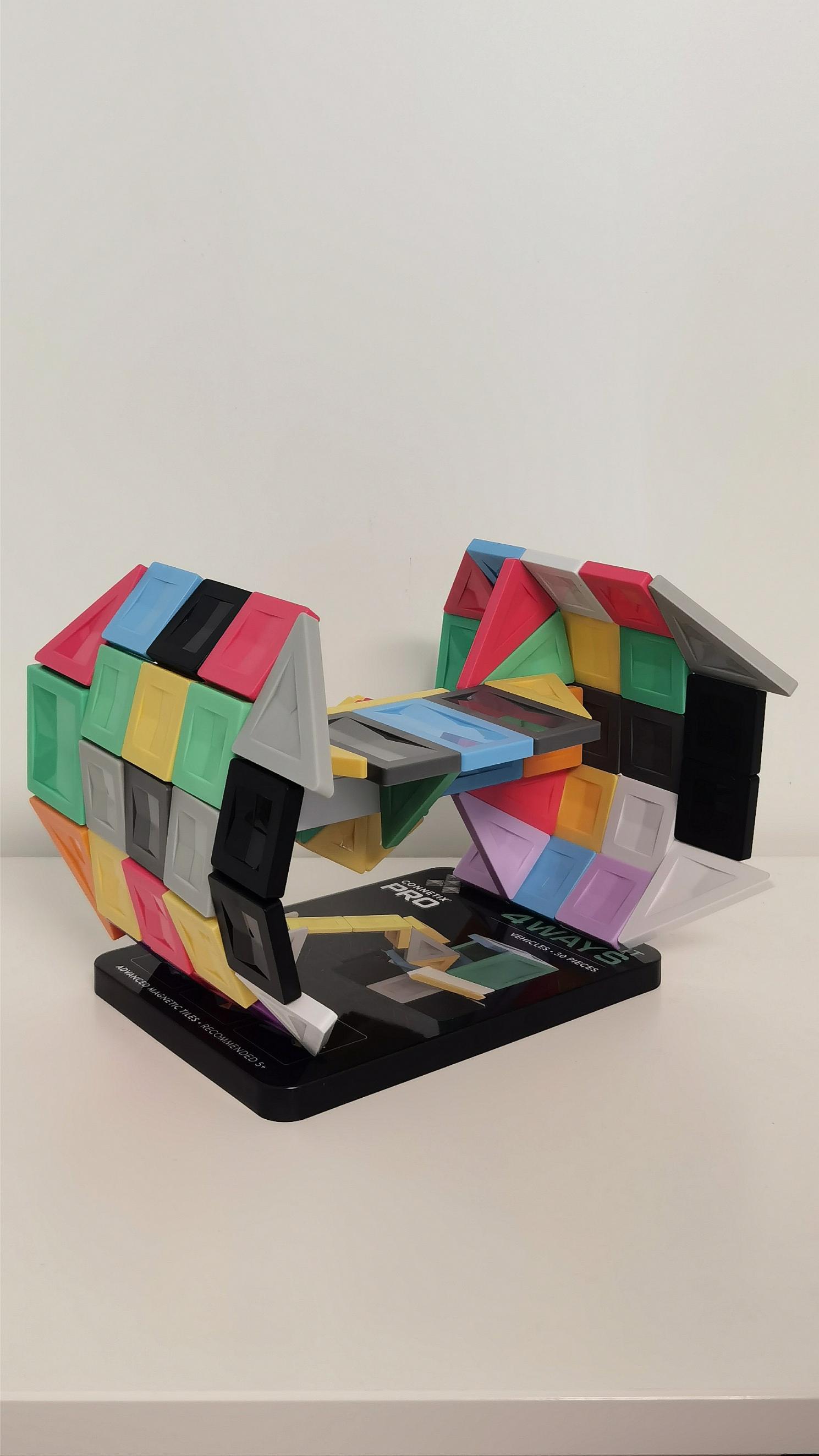
My husband is a Star Wars fan, so for this next idea, I challenged myself to build a ship that he would recognise – my own colourful version of a TIE Advanced fighter. When I showed it to him, he recognized it straight away and loved it!
I combined squares and triangles to create the large, angled wings on either side, with the cockpit in the middle. I also used a tin lid as the base to display the finished build. The mix of colours gives it my own playful touch, while the shape is what brings the ship together.
For fellow Star Wars fans, this could be a fun building challenge to try! Once it’s finished, it could become part of a space adventure or a display to share with another fan.
There are several opportunities for learning through a build like this:
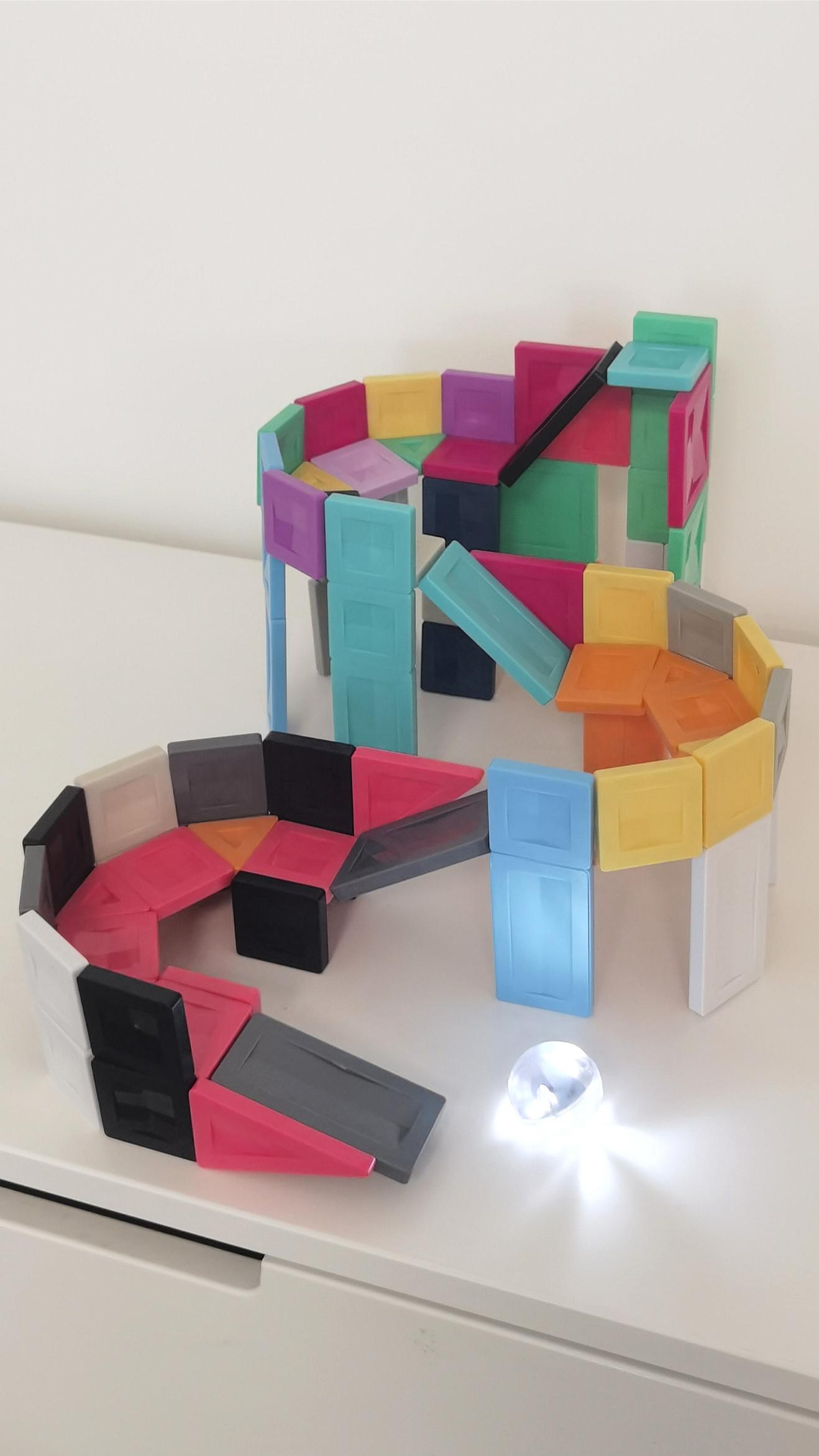
For a winding ball run with slopes and turns at different heights, I used squares and triangles to form the bends, rectangles for the ramps, and upright tiles along the edges to help guide the ball around the track.
Getting the light ball to travel as planned is a big part of the building challenge. Each section needs to connect smoothly to the next, with enough slope to keep the ball moving and enough support to hold the track in place. A small change in the angle can make a difference, especially where a ramp meets a bend.
Tip: Test short sections as you build, then try the whole route. If the ball stops or rolls off, watch closely to see where it happens. Does a tile need lifting slightly? Is there a gap between the pieces? Could an upright square help guide the ball around the corner?
There’s plenty of STEAM exploration happening along the way:
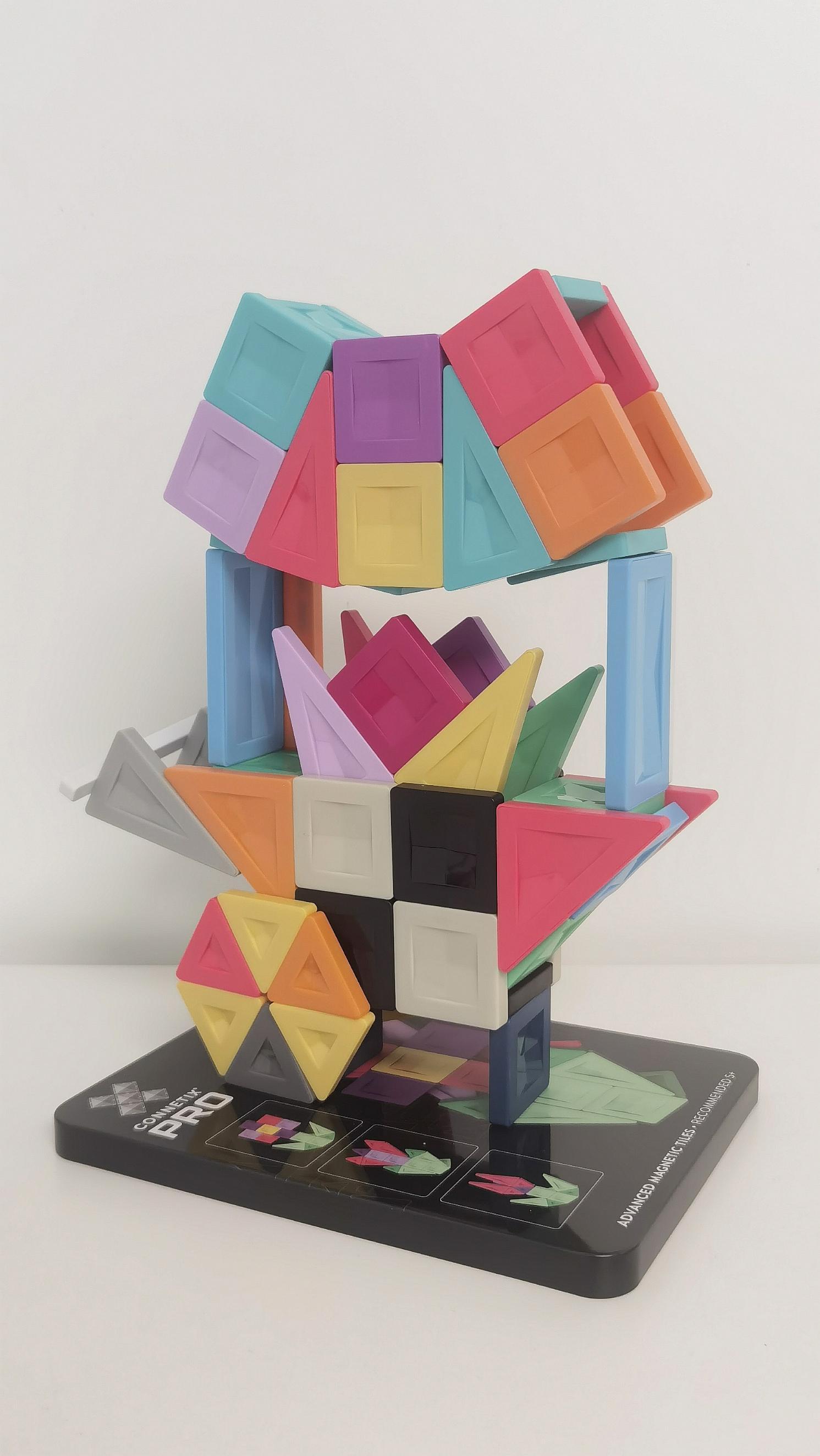
What I enjoyed most about this build was choosing where to use each colour. With all four packs together, I could mix bright shades with softer tones and carry them through the roof, flowers and wheel.
Once it’s built, you could turn this into a miniature flower stall. Add small figures as customers, imagine making bouquets or create a little market around it. You could even make a shop sign and decide how much each flower costs.
There are several opportunities for learning and play in this build:
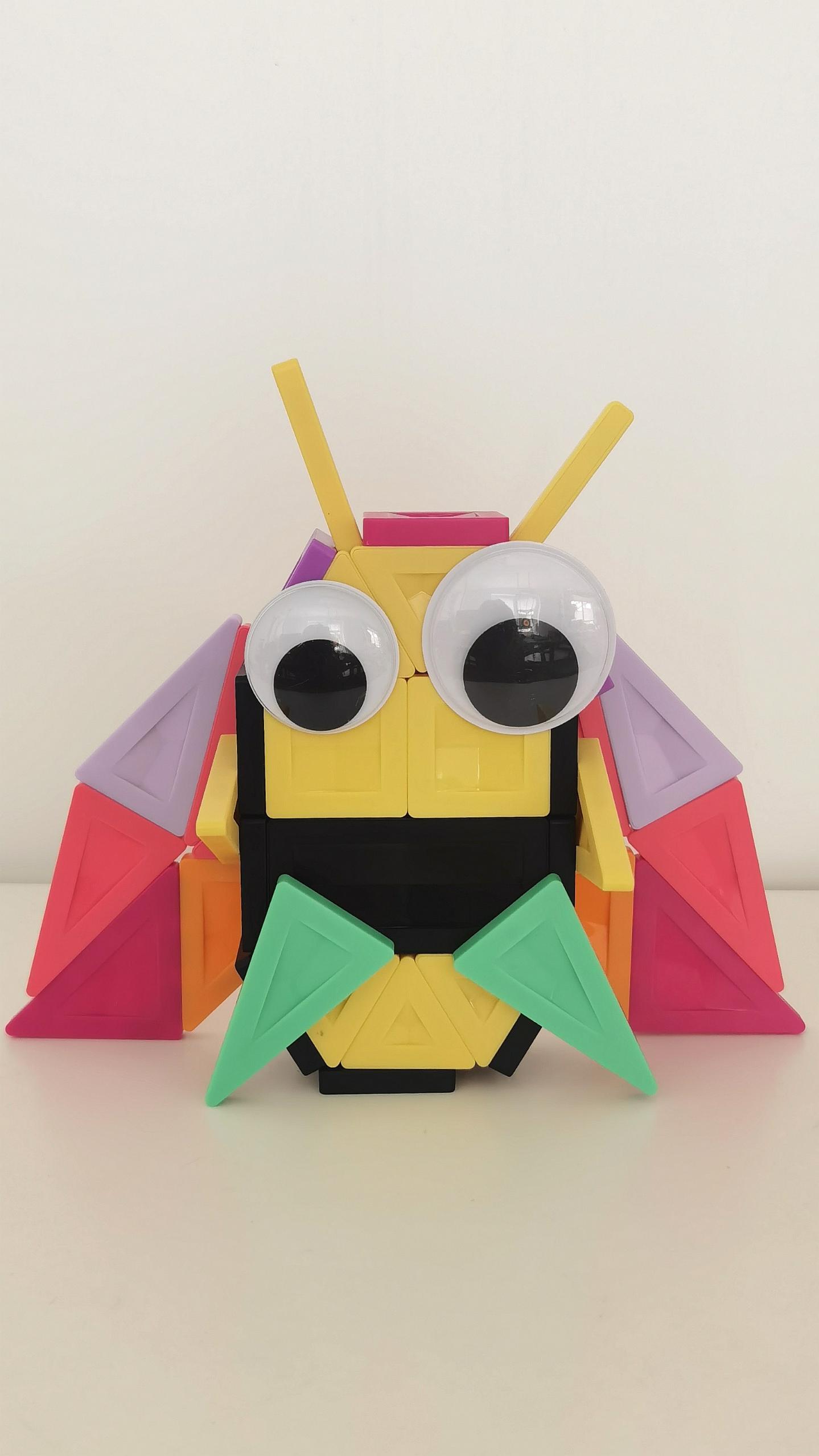
Last but not least, is it a moth, a bee, a fly or maybe a little Minion with wings? For this final idea, I combined all four packs to create a colourful creature and added a pair of googly eyes to give it some character.
Adding those googly eyes changed the whole feel of the build! Suddenly, it looks like a little character waiting for a name and a story. The yellow and black remind me of a bee, while the wide, colourful wings remind me of a moth.
You could try making your own creature and inviting everyone in the family to say what they see. Give it a name, decide where it lives and imagine what it likes to do. Changing the position of the eyes or rearranging a few pieces could give it a completely different personality.
There are several opportunities for learning and creativity in this build:
I hope these nine builds inspire you and your family to keep experimenting and discovering your own ways to play with the CONNETIX PRO Build It 4 Ways range.

Lucy is a mum and content creator on Instagram, passionate about building big architectural structures with CONNETIX. She considers herself an #adultswhoconnetix, and loves sharing play ideas, how-to videos and her love for indoor gardening.
Menu
 Australia

