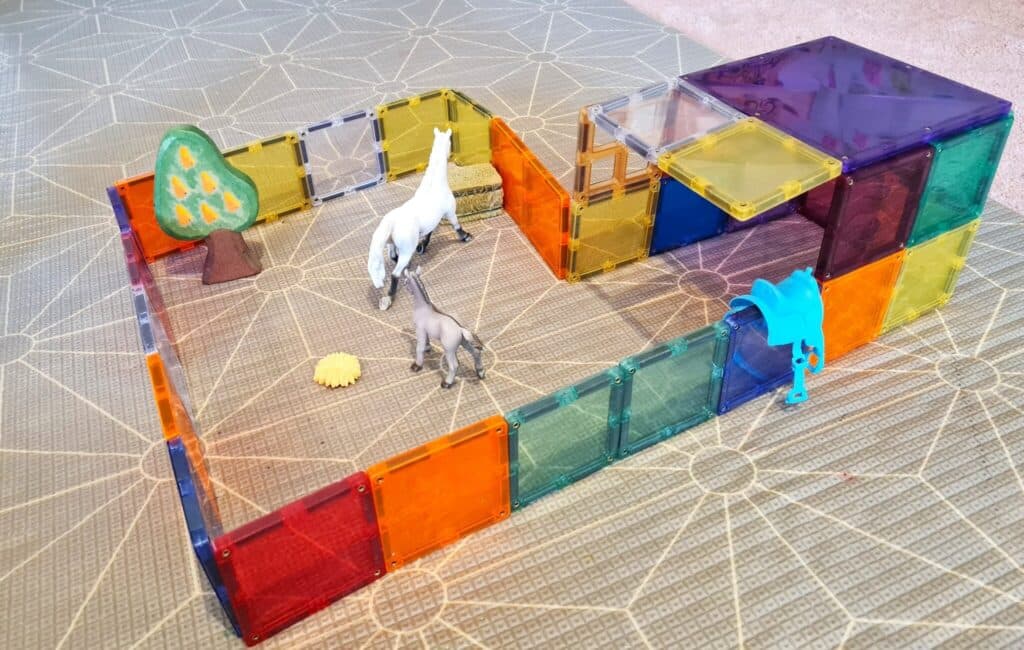
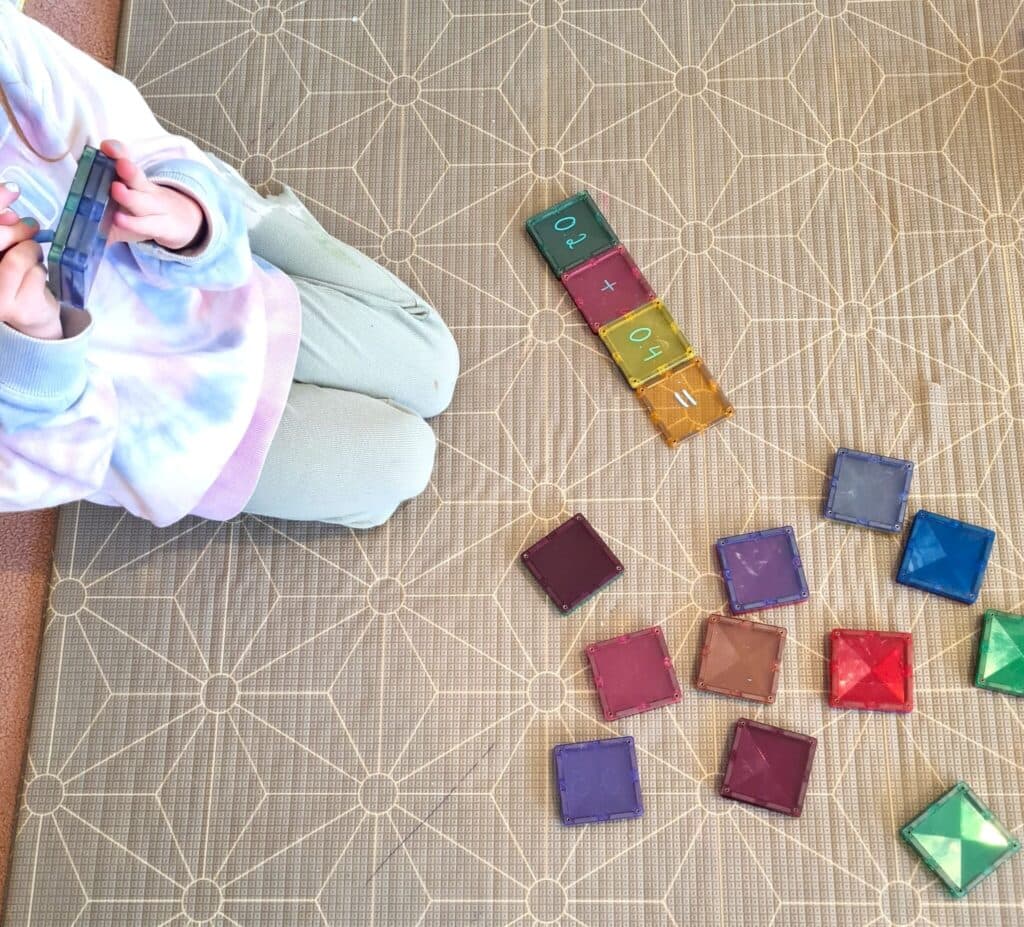
A huge bonus of CONNETIX is that they can be used in so many ways for so many purposes. This includes playing and learning. There are endless opportunities to embrace CONNETIX in the classroom, whether it be in a traditional mainstream school, a Montessori setting, a home-schooling family or any other approach to education.
For so many learners Maths is best explored as a hands-on experience. This means that learning occurs by doing; from making, to creating, moving or manipulating objects, the young person is actively involved in their learning experience. There are so many positive outcomes of incorporating hands-on tasks, this includes promoting critical thinking, sparking meaningful discussions, fostering creativity, allowing children’s confidence to blossom and often sees them learning without even realising it! When I think back to my own experiences as a student the memories that have stuck with me the most are the ones that were super fun, where I was immersed in the task, using my hands to make and create. This is no different for so many kids today. In my personal experience as a classroom teacher I can vouch that students make more connections with their prior knowledge and the concepts being taught when they are absorbed in and enthusiastic about a task because it promotes imagination and open-minded thinking. The beauty of hands-on learning is that it supports the different ways children learn.
At the age of 11 and 12 years, students will have consolidated their foundational mathematics skills. These skills will underpin their understanding of all future concepts as they move forward in their education and everyday life, including a solid understanding of the place value system and their multiplication facts. Even at this level and having consolidated core mathematical concepts, learners still need purposeful experiences to deepen their knowledge and be able to apply their skills to real-life scenarios. It is therefore so important to stimulate a child’s mind by engrossing them in hands-on experiences!
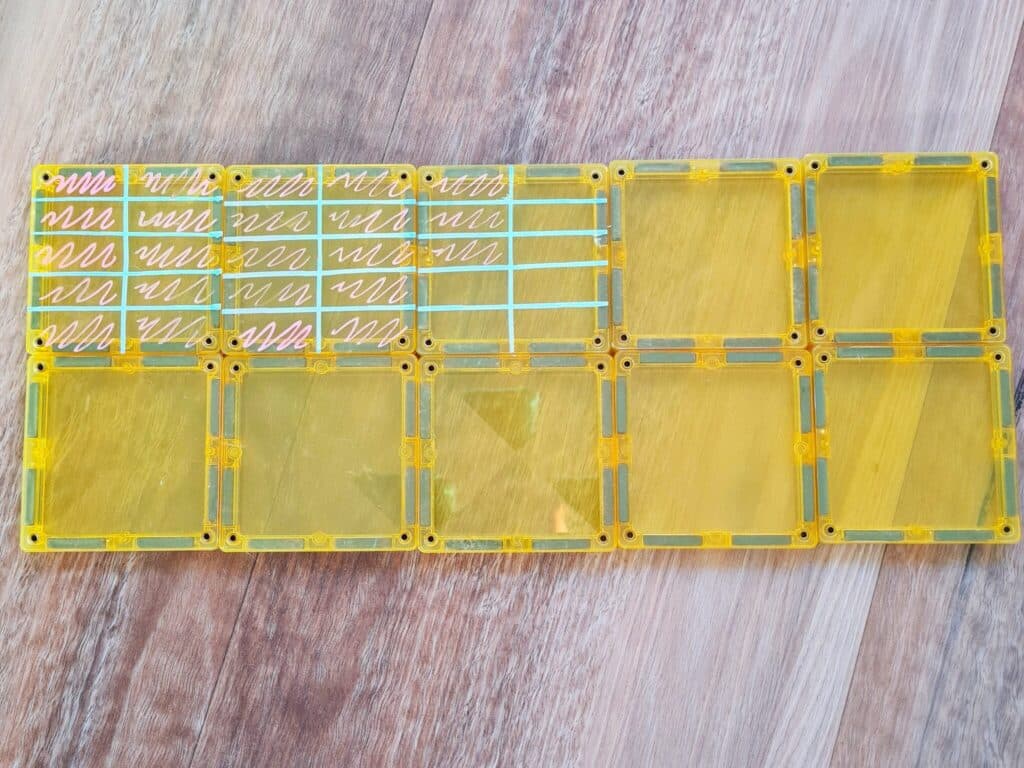
Fractions and decimals are a topic I love to teach but I have found so many learners to have difficulty with or feel worried about this concept. I think it’s probably because we are moving away from whole, concrete numbers into a new abstract world where we can break numbers into smaller parts. However, in my experiences of teaching students about fractions and decimals, hands-on learning is the key! I have seen students attempt worksheets with disheartened attitudes but as soon as they can visualise and manipulate what they are learning about, the cogs start to turn, connections are made, and concepts start to click into place – quite literally with CONNETIX! It’s all about the experience of learning.
Let’s take a look at how CONNETIX can be used to explore fraction and decimal concepts suitable for ages 11 and 12 years.
Tip: Begin teaching fractions with squares and rectangles as they are easier to split into equal parts.
COMPARING FRACTIONS WITH THE SAME DENOMINATOR
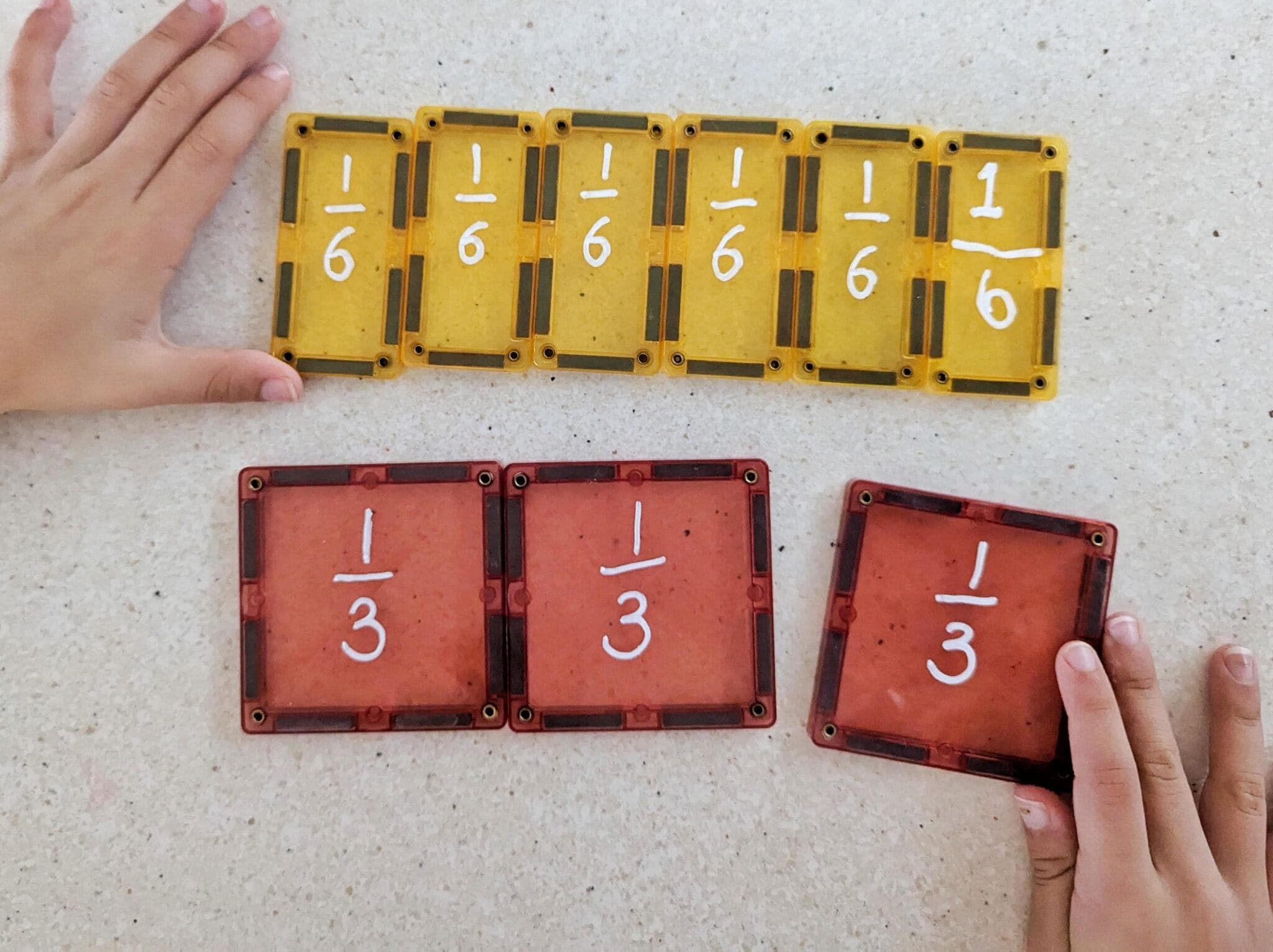
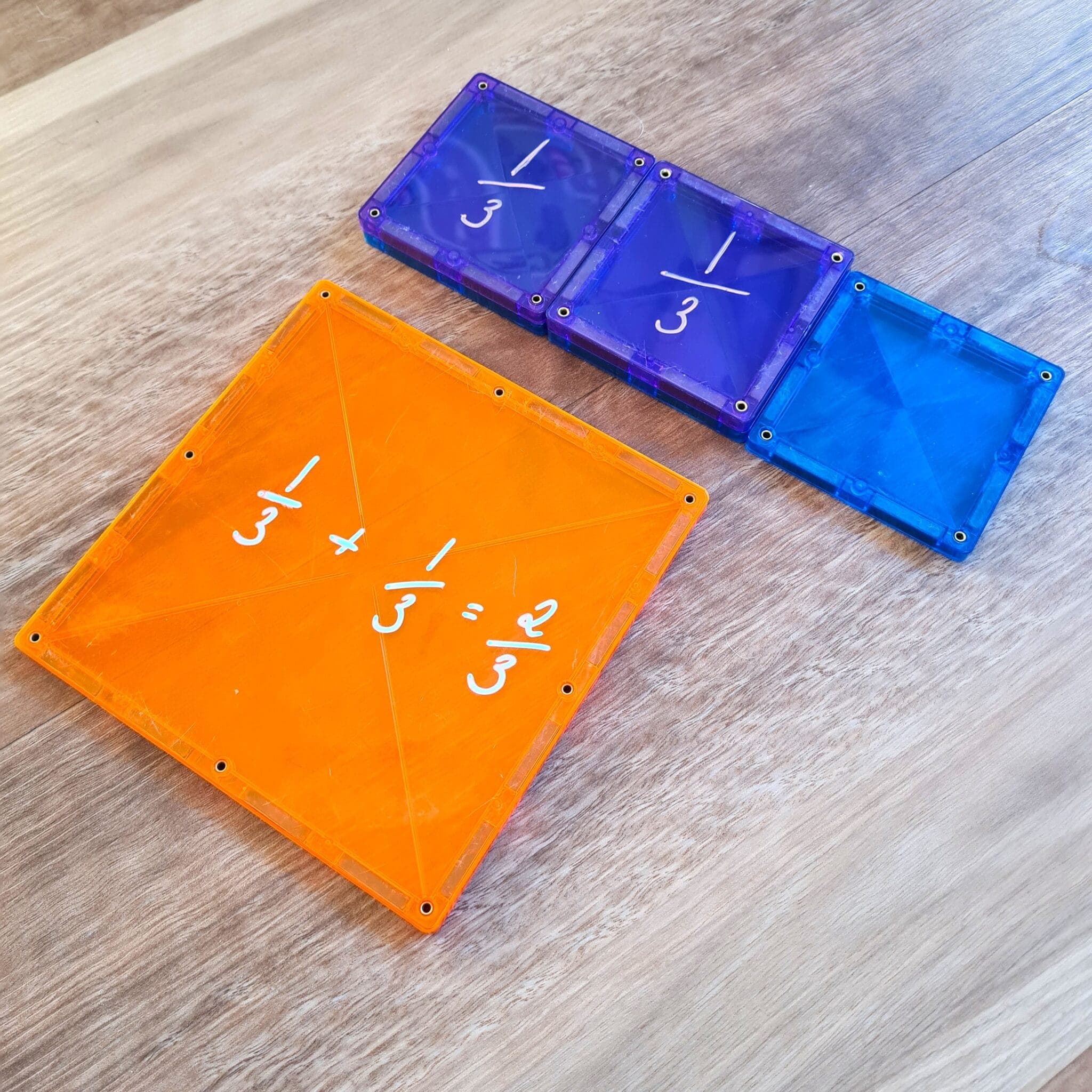
When comparing and ordering fractions we can begin by creating fractions as a shape, using a new tile to show each part of the denominator (the bottom number) of the fraction. So, if we’re working on quarters, we would use four tiles. Then we can label each tile as its own quarter. For example, 1/4 2/4 3/4 4/4 .Now we can clearly compare which quarters are greater and smaller. Don’t forget you can use the < (smaller than) and > (larger than) symbols to integrate other concepts.